Body & Bath
Epsom salts and bath oils: what a soak actually delivers
The evidence boundary for Epsom salt magnesium, what bath oils actually leave on the skin, and the water temperature that protects your barrier.
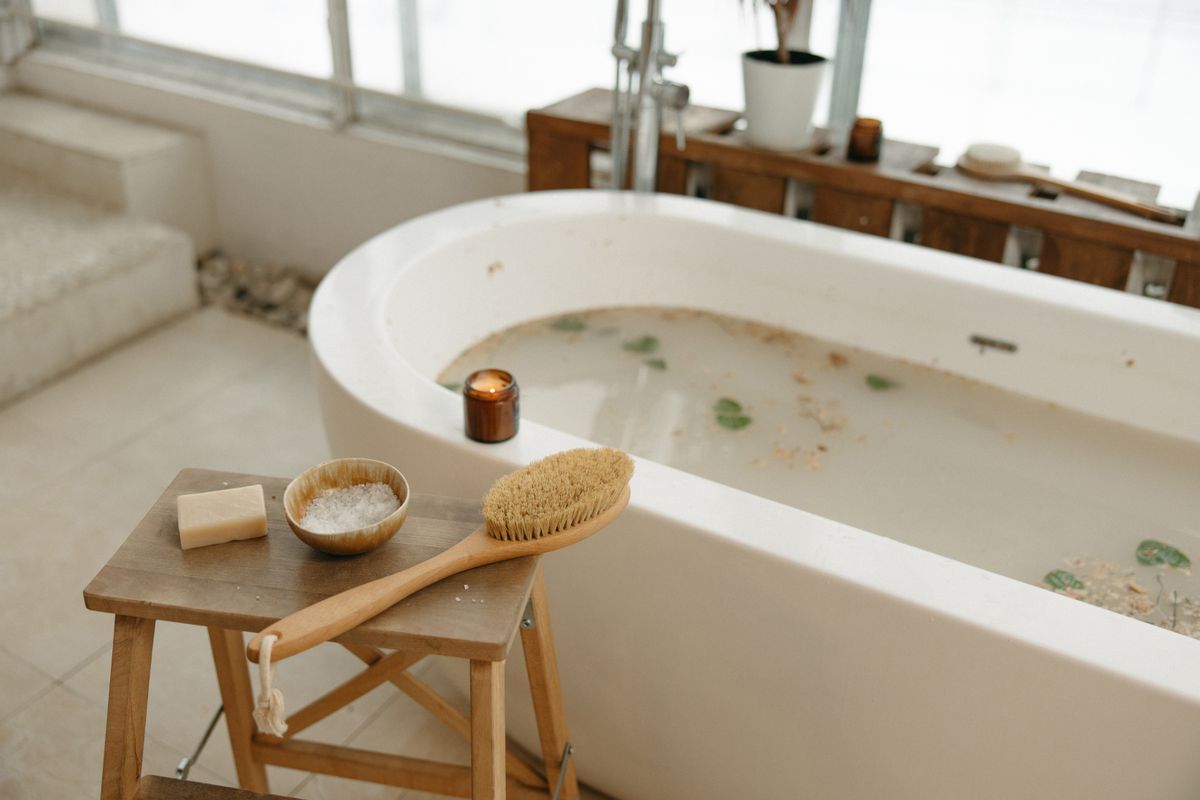
The bath is the oldest wellness product, and its modern shelf splits into two camps that make opposite promises: salts that claim to deliver something into the body, and oils that claim to keep something in it. Reading both honestly requires accepting an uncomfortable asymmetry up front — the oil camp has the stronger case.
The Epsom salt evidence boundary
Epsom salt is magnesium sulfate, and the marketing leans on a real fact: magnesium matters for muscle and nerve function, and many adults fall short of intake. But the proven route is oral. Whether magnesium crosses intact skin from a warm tub in meaningful amounts is simply not established — published work on transdermal magnesium is thin, mostly low-quality, and shows no reliable rise in blood levels after soaking. What a hot saline soak plausibly delivers: warm-water relaxation, a mild buoyant unloading of joints, softer feel to rough skin. Those benefits are genuine. They just do not require the magnesium, and plain warm water produces most of them.
Bath oils: retention, not infusion
Bath oil is the opposite bet: not infusion but retention. The film of oil that clings to skin as the tub drains is an occlusive layer — the same logic as slugging, scaled to a body — that slows water loss after you towel off. Cosmetic oils built on mineral oil or plant triglycerides do this reliably; fragranced “aroma” soaks do it incidentally if at all. For itch-prone or eczema-prone skin, the better-evidenced tub additive is colloidal oatmeal, which dermatology guidance recognizes for symptomatic relief. Fragrance is a legitimate pleasure of the bath; it is just a pleasure, not a treatment.
Temperature and duration: where the damage happens
The variable that matters most in the whole ritual is the one printed on no jar: the tap. Water that is too hot dissolves the lipid mortar between skin cells faster than any surfactant, which is why a long scalding soak leaves skin tight and itchy. Keep the water warm — near body temperature, low 90s°F (low 30s°C) — and the soak short, around 10-15 minutes. The payoff move comes after: pat dry, leave skin damp, and seal with a moisturizer within minutes. This soak-and-seal sequence, standard in dermatology guidance for dry skin, converts bath water from an evaporative loss into hydration.
Choosing between the jars
If the goal is skin: skip the salts, mind the thermometer, and spend the money on a decent bath oil or a plain moisturizer applied wet. If the goal is the ritual — the quiet, the warmth, the muscle unclench — salts are a fine way to dress it, purchased with the evidence boundary in mind rather than the promise on the jar. Skin that needs active treatment responds to ingredients with published work, covered in our body acid guide, not to the tub.
Frequently asked
- Does an Epsom salt bath actually raise magnesium levels?
- The honest answer is that solid evidence is lacking. Oral magnesium supplementation is well studied; transdermal absorption through intact skin in a tub of water is not, and no good controlled trials have shown a measurable rise in blood magnesium from soaking. The relaxation people feel is real — it is just most plausibly the warm water.
- How hot should a bath be for skin health?
- Warm, not hot — roughly body temperature to a few degrees above, around 92-100°F (33-38°C). Water above that range dissolves the skin's lipid cement faster, and the tight, itchy feeling after a very hot bath is barrier disruption, not cleanliness. Hot water also amplifies any drying ingredient in the water.
- Should I moisturize after a bath?
- Yes, and timing matters. Pat skin until just damp and apply a moisturizer within a few minutes — the classic soak-and-seal routine recommended in dermatology guidance. The water episode hydrates the surface, but that moisture evaporates rapidly unless an occlusive or lipid-rich layer traps it in.