Hair & Fragrance
Conditioner vs hair mask: same chemistry, different doses
Conditioner and mask share one mechanism — cationic conditioners gripping the cuticle — and differ in dose, contact time and oil load, not in kind.
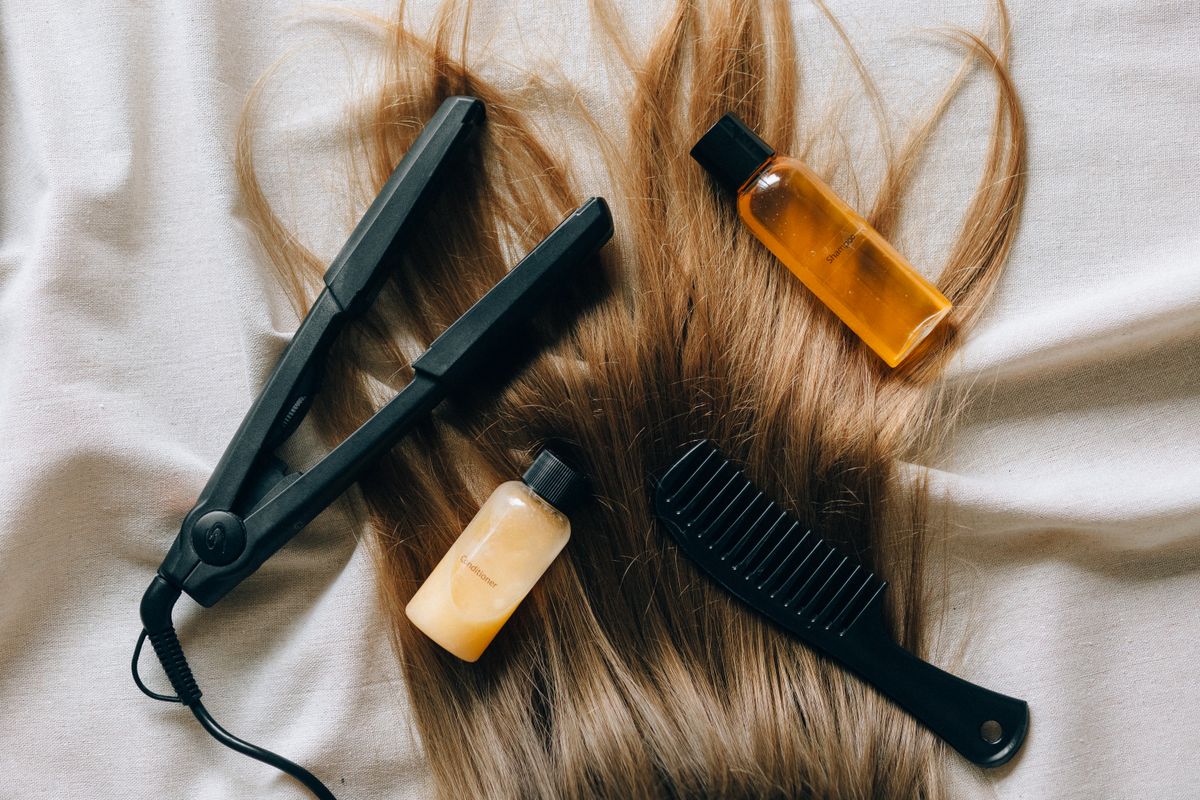
The hair mask aisle sells transformation; the chemistry says the two products are siblings. Conditioner and mask run on the same mechanism — positively charged conditioning agents parking on the hair’s surface — and differ mainly in how much of them you get and how much oil rides along. Which one your hair needs is mostly a question of hair thickness and damage, not of ambition.
One mechanism: the cationic grip
Hair carries a slight negative charge, and it concentrates exactly where damage is: weathered ends and lifted cuticle edges hold more charge than healthy mid-lengths. Cationic conditioning ingredients — quaternary ammonium compounds like behentrimonium and cetrimonium, plus fatty alcohols — are attracted to those sites and adsorb onto the surface. The result is instantaneous and physical: flattened cuticle scales, less friction, less static, more slip for detangling. Neither product penetrates deeply or rebuilds anything; both paint a smarter coating. That coating is real conditioning — it just is not reconstruction.
Dose, contact time and oil load
The differences are quantitative. A daily conditioner is a light formulation: moderate conditioning agents, short contact — a minute or three — and enough of a rinse-away base that it never weighs hair down. A mask concentrates the same ingredients at higher levels, adds heavier oils and butters, and asks for five to ten minutes so the film builds. Used every wash, the conditioner maintains the coating; used weekly or so, the mask oversupplies it. That is the whole relationship — the mask is not a different technology, it is a heavier serving of the same one.
Fine hair versus coarse hair
Thickness decides tolerance. Fine hair has little mass to carry a heavy film, so rich masks and butter-laden conditioners flatten it within a wash — the right tool is a lightweight lotion conditioner, with masks as an occasional treat or skipped entirely. Coarse, curly or chemically processed hair starts drier (scalp oils travel down the strand more slowly) and often outright needs the heavier load: a rich cream conditioner every wash, a mask weekly. Damage shifts the dial the same direction; bleached hair of any thickness drinks more than virgin hair. Our guide to hair oil types maps the oil side of the same weight question.
The protein repair boundary
Masks promising “repair” lean on hydrolyzed proteins, and the honest claim is filling, not fixing. Protein fragments settle into gaps and chipped edges of the cuticle, temporarily restoring smoothness and tensile strength until the next washes wear them away. Structural damage — broken bonds, split ends — is permanent; only scissors remove a split end. There is also a failure mode in the other direction: protein-heavy routines can stack until hair turns stiff and brittle. If the label promises reconstruction, read it as our scalp guide reads its neighbors: mechanism first, marketing second.
Buy by weight class, not by verb. The jar that matches your hair’s thickness does more than the one with the loudest claim.
Frequently asked
- Is a hair mask just a thicker conditioner?
- Essentially, yes. Both work through cationic conditioning agents that adsorb to the hair's negatively charged cuticle; a mask simply loads more conditioning agents and oils, with longer contact time. The difference is intensity and price, not mechanism — which is why a good conditioner covers most needs.
- Can I use a hair mask every time I wash?
- Fine and normal-density hair usually cannot — the added oils and heavy conditioners accumulate and the hair goes limp within a wash or two. Thick, coarse or chemically treated hair can often take weekly or even twice-weekly masks comfortably. Let the hair's response, not the jar's calendar, set the frequency.
- Do protein treatments actually repair damaged hair?
- They patch, not repair. Hydrolyzed proteins settle into gaps and chipped edges of the cuticle and temporarily restore smoothness and strength; the hair's structural damage — broken bonds, split ends — is permanent. Overdoing protein can leave hair stiff and brittle, so alternate with moisture and trim what is split.