Hair & Fragrance
Scalp care basics: skin first, hair second
The scalp is facial skin with denser oil glands — wash by oil output, read the two kinds of flakes correctly, and know what scrubs and serums can do.
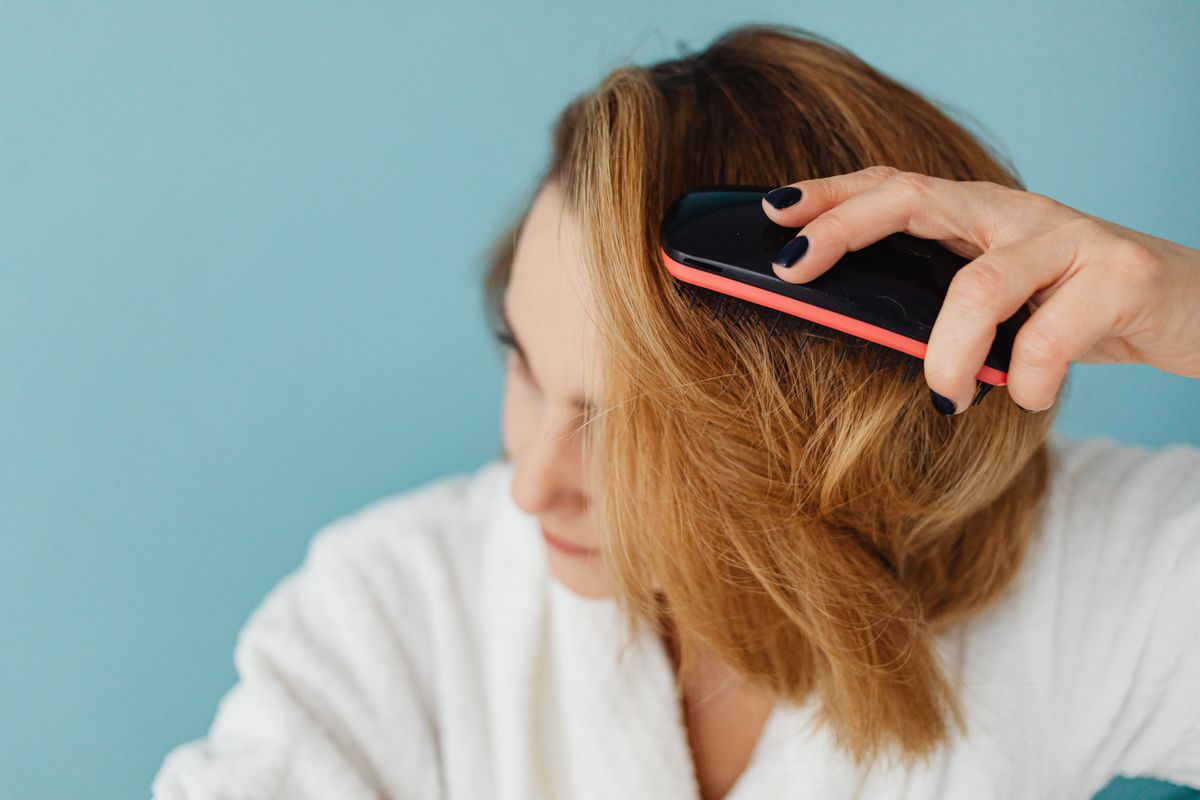
Most scalp problems are skin problems that happen to grow hair. The scalp is the face’s northern province — same tissue, same issues — with denser oil glands and worse ventilation. Treating it like skin, instead of like a hairstyle’s foundation, resolves most of the confusion around washing frequency, exfoliating scrubs, serums and that persistent dandruff question.
Facial skin, oilier
Take the face and multiply the sebaceous glands, then cover them with hair: that is the scalp. It produces sebum, sheds cells and reacts to harsh detergents exactly as facial skin does. Two consequences follow. First, scalp skin is visible skin trouble waiting to happen — flaking, irritation and clogged follicles are dermatology, not grooming failures. Second, the sun reaches it: part lines burn like any other skin, and scalp sunscreen or a hat is genuine skin care, not an accessory.
Wash frequency follows the oil
The oldest folklore in the category is that washing less “trains” the scalp to produce less oil. It does not — sebum output is governed by hormones and genetics, and the training works about as well as training your face to stop being oily. The honest rule: wash when the roots feel and look oily. Oily scalps can wash daily with a mild, modern surfactant system; the sulfate-free debate is really about surfactant harshness, covered in our guide to what sulfate-free changes. Dry scalps may comfortably stretch two or three days. What matters is that buildup — sebum and styling residue — does not sit on follicles for a week, which is where dry shampoo overuse earns its bad reputation, as our breakdown of what dry shampoo actually does explains.
Scrubs, serums and massage: real effects, real limits
Physical and chemical exfoliants do one job well: removing buildup that shampoo alone leaves behind. Salicylic acid-based scalp products dissolve the sebum-and-cell mixture; salt or sugar scrubs do it mechanically. Neither changes oil production. Serums live on a similar slope — soothing and hydrating ingredients genuinely calm an irritated scalp, while “growth” claims outrun most of the data. Massage is the modest one: small published work suggests brief daily massage may slightly thicken hair over months, and it certainly improves circulation and product distribution at zero cost. A useful addition, not a transformation.
Two kinds of flakes, two strategies
Flake diagnosis is the category’s real fork. Small, white, dry flakes scattered loosely — often worse in winter — point to a dry scalp: over-cleansing, hot water or weather. The fix is gentler: milder shampoo, less frequency, and a hydrating scalp treatment. Large, yellowish, greasy flakes on an itchy, reddened scalp are a different condition — seborrheic dermatitis, driven by the yeast Malassezia — and no moisturizer touches it. That kind answers to antifungal actives: zinc pyrithione, selenium sulfide, ketoconazole shampoos, used as directed and kept in rotation. If flakes persist through the correct branch of this fork, a dermatologist visit is the next step, not another bottle.
Skin science, applied north of the forehead. Wash to the oil, diagnose the flake, and spend the serum money accordingly.
Frequently asked
- How often should I wash my hair?
- As often as your oil output demands. Oily scalps are fine washing daily with a mild surfactant system; dry scalps may stretch two or three days. Sebum production is set by hormones and genetics, so there is nothing to 'train' — washing less than your scalp needs just leaves buildup sitting on the follicles.
- Is dandruff the same as a dry scalp?
- No, and the treatment diverges. Dry-scalp flakes are small, white and loose, often worse in winter. Seborrheic flakes are larger, yellowish and greasy, sitting on an itchy, reddened scalp driven by the yeast Malassezia. The second kind responds to antifungal ingredients — zinc pyrithione, ketoconazole, selenium sulfide — which moisturizing alone cannot supply.
- Does scalp massage grow hair?
- The evidence is small but not zero: a modest study on brief daily massage reported slightly thicker hair after months. Whatever the growth effect, massage improves circulation and product distribution, costs nothing and harms nothing — worth doing, just not worth expecting transformation from.