Hair & Fragrance
Heat protectants, read by temperature: three sprays from $7 to $28
Matching the labeled temperature to your iron and your hair type is the only fair test — CHI, ghd and TRESemmé compared on mechanism, formula and price.
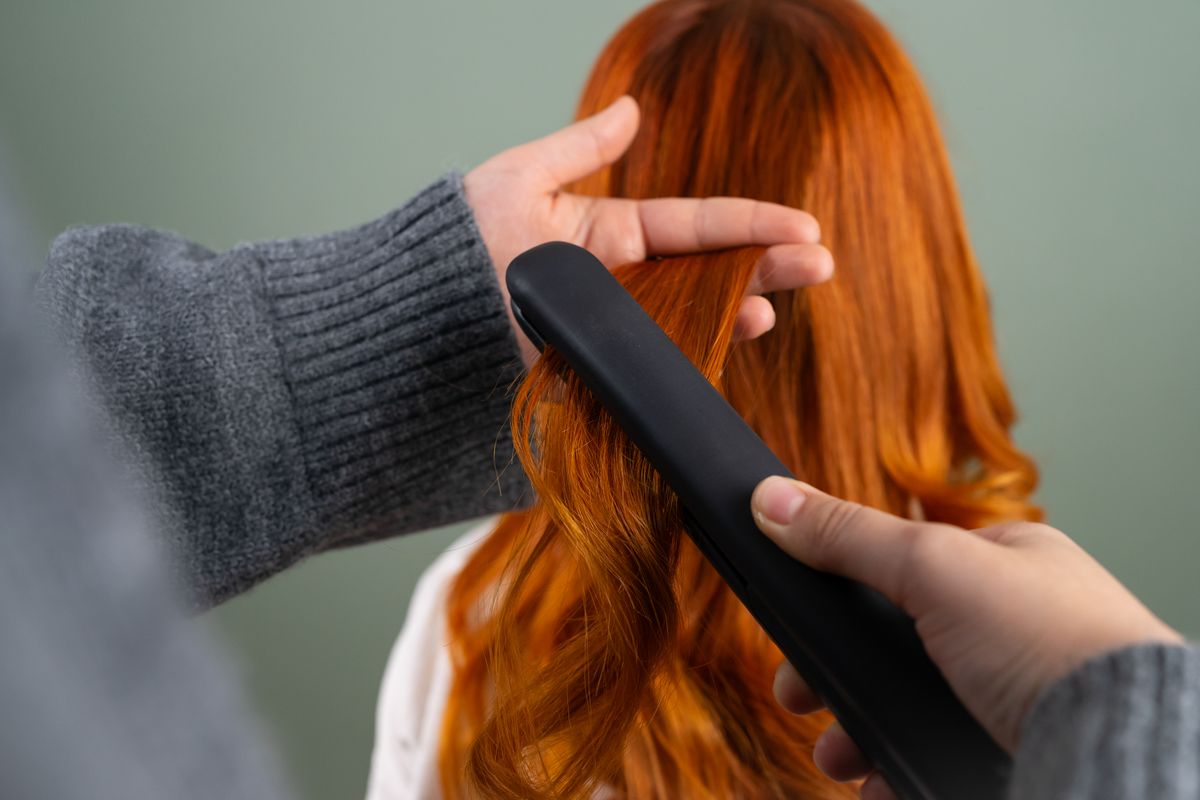
Heat protectants are sold as one product, but the shelf actually splits by a number most shoppers never check: the temperature on the label, set against the temperature your tool runs at. Flat irons span roughly 300-450°F (150-230°C) — the same range, not coincidentally, printed on the sprays that promise to guard against them. Once you read the two numbers together, the category organizes itself. Our other hair and fragrance guides take the same label-first approach.
The film spreads heat rather than absorbing it
A heat protectant is, mechanically, a thin polymer-and-silicone coat. Silicones such as amodimethicone and PEG-12 dimethicone spread into an even film that distributes heat across the strand instead of letting a hot plate scorch one spot, and they slow the evaporation of the hair’s own moisture during the pass. The styling polymers behind the hold in hairsprays do part of the same work. Published work on heat damage centers on this mechanism — even heat, controlled water loss — rather than on any ingredient that “absorbs” heat, which no label ingredient meaningfully does.
The number to keep in mind is the boil of water: 212°F (100°C). A water-based spray ironed onto damp hair drives steam into the strand, which is why the standard instruction is to apply to dry hair and let the mist settle before the plate touches it.
Behind the 450°F figure
The 450°F (232°C) figure on CHI 44 Iron Guard Thermal Protection Spray and on TRESemmé Thermal Creations Heat Protectant Spray is the brand’s own declaration, not an independent certificate. In practice it means the film is engineered not to break down at the maximum temperature a consumer iron reaches — a ceiling claim, not a zero-damage promise. ghd Bodyguard Heat Protect Spray takes the opposite route: it prints no temperature at all, because ghd builds its tools around a 365°F (185°C) ceiling and the spray is formulated for that pairing. Neither approach is wrong; they are answering different questions.
Under $10: the budget workhorse
TRESemmé Thermal Creations Heat Protectant Spray is the drugstore fixture, at $6.98 for 8 fl oz. Its verified ingredient list is exactly the textbook system described above — amodimethicone, PEG-12 dimethicone, PVP — in a water-and-glycerin base. The tradeoff at this price is refinement, not protection: it dries fast, and heavy application can leave film that flakes against a plate. That film also builds up on the strand over weeks of daily use, which is where a sulfate-free washing routine intersects with hot-tool habits.
The middle and the splurge
CHI 44 Iron Guard Thermal Protection Spray, $20 for 8 fl oz, adds ceramic compounds and proteins to the film and carries a 4.4 rating from 145 reviews on the brand’s own site. ghd Bodyguard Heat Protect Spray, $28 for 4 fl oz, is the lightest wear of the three and the one to buy if your iron is a ghd; bought for use with a hotter third-party iron, its missing number becomes an honest gap rather than a selling point.
Matching the claim to the tool
Match the claim to the tool first: a 450°F-labeled spray for a hot iron, the ghd system for a capped one. Then match the weight to your hair — fine hair wants the thinnest film at the lowest dial setting, and coarse hair wants full coverage at 400°F or so. The American Academy of Dermatology’s guidance points the same direction as the engineering: the lowest effective temperature, and heat styling once a week or less does more for your hair than any spray.
The picks
Some links below are affiliate links — we may earn a commission at no extra cost to you.
The fair way to compare heat protectants is by the temperature on the label against the temperature your tool actually runs at — flat irons span roughly 300-450°F (150-230°C), and fine hair needs far less than coarse hair. On that measure, CHI 44 Iron Guard and TRESemmé Thermal Creations both declare 450°F coverage, while ghd Bodyguard publishes no number and instead assumes you pair it with ghd tools capped at 365°F. All three work by the same mechanism — polymers and silicones forming a heat-spreading film — so choose by price per ounce and by which claim structure matches your tool.
CHI 44 Iron Guard Thermal Protection Spray
$20 $2.50/gFarouk Systems (CHI)
4.4 / 5 from 145 reviews — chi.com
The salon-default mid option, sold in a 2 oz size at $8 and the 8 oz bottle priced here. The brand credits ceramic compounds and strengthening proteins alongside its thermal film, and the label declares protection up to 450°F (232°C) — the full range of consumer irons.
- Size
- 8 fl oz (2 oz also sold)
- Labeled protection
- Up to 450°F (232°C)
- Key film-formers
- Silicones with ceramic compounds and proteins
- Hair types
- All, per the brand
ghd Bodyguard Heat Protect Spray
$28 $7.00/gghd
The most expensive here and the only one that prints no temperature figure. ghd's system pairs the polymer-based spray with its own tools, which are engineered around a 365°F (185°C) ceiling — a lower-heat philosophy that makes the missing number coherent. A fine-hair variant exists at the same price.
- Size
- 4 fl oz (1.7 oz travel also sold)
- Labeled protection
- No °F figure; built for tools capped at 365°F (185°C)
- Key film-formers
- Styling polymers plus an amodimethicone copolymer
- Hair types
- All, with a fine-hair version available
TRESemmé Thermal Creations Heat Protectant Spray
$6.98 $0.87/gTRESemmé (Unilever)
The long-running Heat Tamer formula, which the brand now also sells as a Protecting Heat Styling Spray with the same ingredient list. Water-based with amodimethicone and PEG-12 dimethicone as the working film, labeled to 450°F — at roughly a quarter of ghd's price per ounce.
- Size
- 8 fl oz
- Labeled protection
- Up to 450°F (232°C)
- Key film-formers
- Amodimethicone, PEG-12 dimethicone, PVP
- Base
- Water and glycerin, fast-drying
| Specification | CHI 44 | ghd Bodyguard | TRESemmé |
|---|---|---|---|
| Labeled temperature | Up to 450°F (232°C) | None printed; 365°F tool pairing | Up to 450°F (232°C) |
| Quoted size | 8 fl oz | 4 fl oz | 8 fl oz |
| Price on page | $20 | $28 | $6.98 |
| Working film | Silicones + ceramic compounds | Polymers + amodimethicone copolymer | Amodimethicone + PEG-12 dimethicone |
| Best for | High-heat ironing on most hair | ghd-tool owners, lower heat | Budget blowouts and irons |
Where these numbers come from
- CHI — 44 Iron Guard collection page with prices.
- ghd — Bodyguard Heat Protect Spray product page.
- TRESemmé — Protecting Heat Styling Spray product page (Thermal Creations formula).
Frequently asked
- What temperature should I set my flat iron to?
- Fine or chemically treated hair does well at 300-350°F (150-175°C), medium hair around 350-400°F, and coarse or tightly coiled hair usually needs 400-450°F to hold a style. The lowest setting that achieves the result is the correct setting — heat damage accumulates with every pass, not just at the maximum.
- Do heat protectants actually work?
- The mechanism is real: polymer and silicone film-formers spread heat more evenly across the strand and slow moisture loss, which reduces the localized hot spots that crack cuticles. What no spray does is make high heat harmless — protection scales down as the dial goes up, which is why temperature control matters as much as the product.
- Why does my heat protectant smell burnt?
- Product applied too heavily, or a water-based spray ironed before it has dried. Water inside the strand flashes to steam above the boil, and excess film can char against a hot plate. Apply a light mist to dry hair, let it settle for a moment, then iron — and wipe residue off the plates.