Body & Bath
Stretch mark creams: what the evidence actually supports
Stretch marks are structural tears in the dermis, so creams manage itch and early appearance — fading settled lines is time and procedure territory.
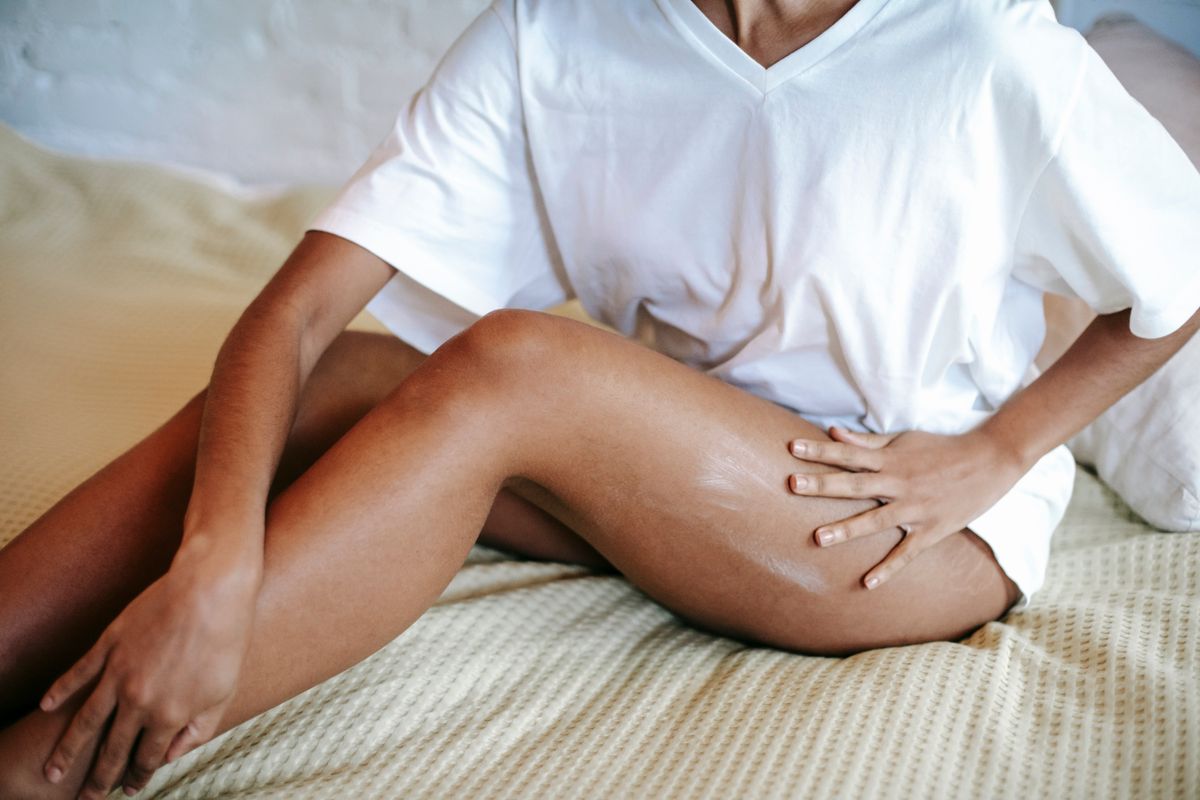
The jar promises smooth skin; the biology disagrees. Stretch marks are structural tears in the dermis — the collagen and elastin scaffolding under the surface — and no cream rebuilds scaffolding. What a good body cream does is narrower and more honest: it keeps skin comfortable while lines form, and it may nudge how early ones mature. Here is the scoreboard, without the marketing.
A tear in the dermis, not a pigment problem
Rapid stretch, whether from pregnancy or a growth spurt, can tear the dermal network faster than it can adapt. The line starts red or purple: inflamed, richly supplied with blood vessels, still biologically active. Over months it settles into a pale, silvery streak that behaves like a scar, because functionally it is one. This matters for every claim on the box. Early red lines live in skin that is still remodeling; white lines are mature scar tissue with little activity left to influence. The two stages respond to treatment about as differently as a fresh bruise and an old one.
What a cream can plausibly do
Moisturized skin stretches more comfortably, and well-hydrated skin itches less as it expands — that part is uncontroversial. On prevention, the evidence is thin and mostly genetic: family history and hormone environment predict stretch marks better than any routine. On early red lines, published work centers on two candidates — Centella asiatica extracts and hyaluronic acid — with modest signals on appearance, not erasure. A plain, fragrance-free body lotion used daily is a defensible baseline; our guide to urea body lotions covers what serious hydration looks like. Everything beyond that is consolation, not construction.
The ingredient scoreboard, honestly
Centella asiatica (often listed as asiaticoside or madecassoside) has the most published attention and the most modest claims worth making. Hyaluronic acid earns its place for hydration during the stretching phase. Retinoids — the only topicals with real evidence on early striae — carry a hard line: they are contraindicated during pregnancy and while breastfeeding. Cocoa butter and shea butter are the classics; controlled evidence for prevention is weak, though as moisturizers they do no harm. Read any bottle that says “removes” or “erases” as advertising, not dermatology.
The white lines: time and procedures
Once a line has gone white, topicals have little to grip. This is procedural territory — fractional lasers, microneedling, radiofrequency — where the realistic goal is softening texture and narrowing the contrast, not deleting the line. If a mature mark bothers you, a dermatologist consult buys more than a fourth jar. For the rest, the daily cream still earns its shelf space: for comfort, for itch, for skin that feels like skin. That is the honest contract. Body acids, covered in our guide to PHA and lactic acid, play a supporting role in overall texture — not in scar remodeling.
Creams keep you comfortable while skin does what it will. The label’s verb tells you whether the brand agrees.
Frequently asked
- Do stretch mark creams actually remove stretch marks?
- No cream removes them. Stretch marks are tears in the dermal collagen and elastin network, a structural change no topical can rebuild. Creams can ease the itch of stretching skin and may modestly influence how early red lines mature, but settled white lines respond mainly to time and in-office procedures.
- Can I use retinol cream on stretch marks during pregnancy?
- No. Retinoids are contraindicated in pregnancy and while breastfeeding, and the abdomen and chest are exactly where absorption concerns concentrate. A plain fragrance-free moisturizer is the safe lane during pregnancy; retinoid discussions belong to the postpartum period and a dermatologist's guidance.
- What fades old, white stretch marks?
- Procedural dermatology, not jars. Fractional lasers, microneedling and radiofrequency devices work on the dermal remodeling that topicals cannot reach, with realistic goals of softening texture and narrowing contrast rather than erasing the line.